Use Case
Employee Onboarding Gifts: When a Branded Bottle Is Better Than a Swag Box
Compare a branded bottle with a full swag box for employee onboarding, using practical procurement, fulfillment, quality, and cost decisions.
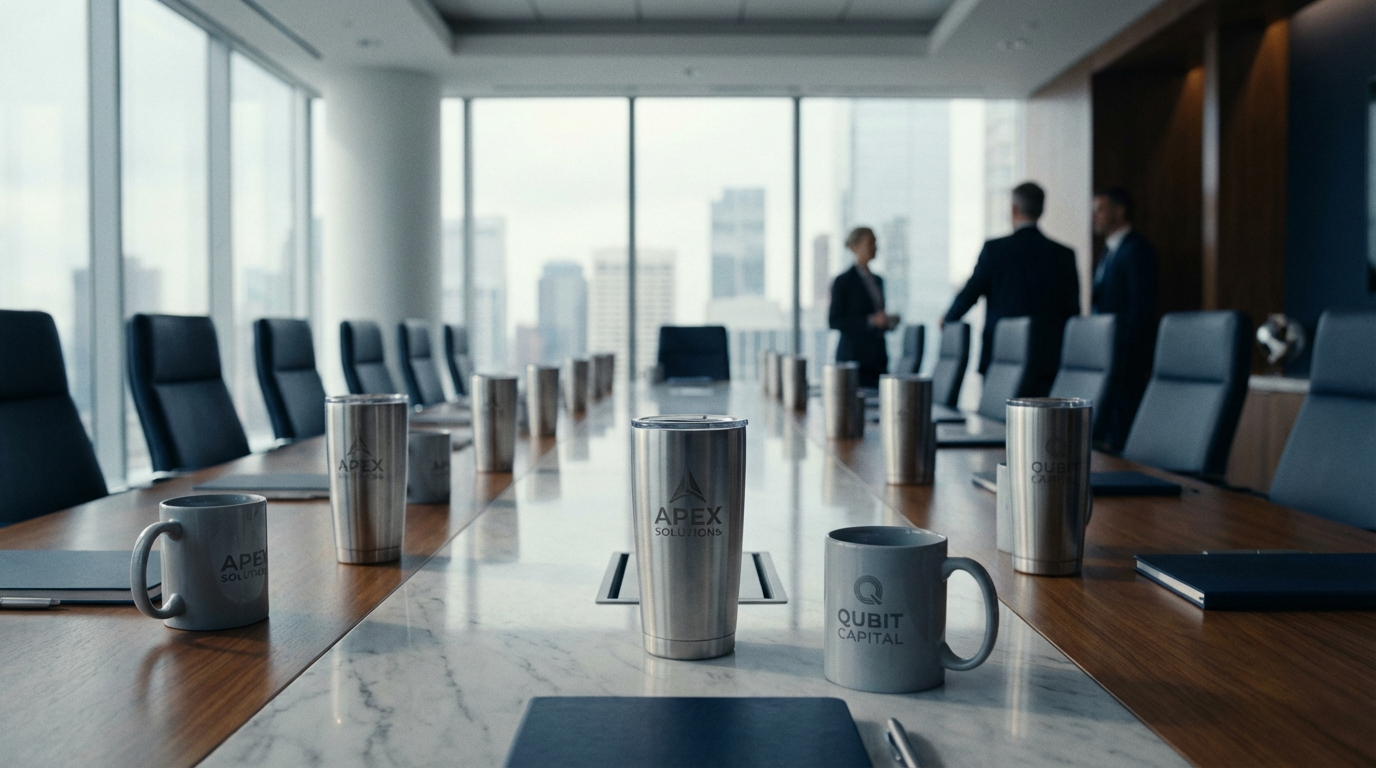
For employee onboarding gifts, a branded bottle is usually the better default when the goal is daily utility, consistent quality, and simpler fulfillment. A swag box earns its place when several items serve distinct onboarding needs. The decision should follow employee context, landed cost, packaging risk, hiring cadence, and how the item will be used after day one.
The procurement question is not bottle versus box
A branded bottle and a swag box solve different operational problems. The bottle is a single hero item: one specification, one decoration approval, one primary quality check, and one product that can travel from desk to commute to home office. The box is a coordinated kit: several items, several suppliers or SKUs, more packing rules, and more opportunities for mismatch.
That distinction matters because onboarding is a process, not a parcel. The Society for Human Resource Management’s onboarding guide defines onboarding as integrating new employees into the organization and helping them understand its structure, culture, mission, and values. It may continue for months. A gift can reinforce that process, but it cannot replace manager contact, access credentials, role training, or a useful first-week plan.
In factory and procurement terms, the right question is: what physical item supports the onboarding objective with the fewest avoidable failure points? If the answer is hydration, a bottle may be enough. If the answer is a remote-work setup, a notebook, access card, apparel item, and bottle may each have a defined role. If the answer is simply “make the box feel full,” the program needs a clearer brief before anyone requests a quote.
When a branded bottle is the stronger default
Choose a bottle when utility is more important than variety. A reusable bottle has a clear use case, does not require apparel sizing, and can serve office, hybrid, field, and remote employees with the right configuration. The Centers for Disease Control and Prevention guidance on water and healthier drinks recommends carrying a reusable water bottle as one practical way to drink more water during the day. That is not evidence that a logoed bottle improves retention; it is evidence that the object has an everyday function beyond the onboarding event.
A single bottle also reduces the number of decisions that must remain consistent. Procurement can approve the body, capacity, lid, interior material, exterior finish, logo size, packaging, and inspection standard in one sample. Operations can count one primary SKU instead of reconciling a bill of materials with multiple accessories. HR can write one distribution rule rather than deciding which employee receives which assortment.
For DrinkwareWorks USA programs, stainless steel tumblers and water bottles have a 50-unit MOQ and a 2–4 week production period after approved artwork. Those are production conditions, not arrival guarantees: artwork approval, packaging, inspection, freight, customs where applicable, and distribution remain separate steps.
When a swag box earns its extra complexity
A box is justified when each added component performs a different job. A bottle plus a welcome letter, access instructions, notebook, or role-specific item can support different parts of the employee experience. It may also suit a remote-first welcome or a role that requires physical equipment before day one.
The test is functional distinctness. Ask what would be lost if each item disappeared. If removing the notebook removes a real note-taking need, keep it. If removing the card removes the only human welcome message, keep it. If removing a fourth low-cost accessory changes nothing, it is packaging filler rather than onboarding value.
A swag box has predictable costs beyond item prices:
- More SKUs to source, approve, receive, store, and count.
- More components that can arrive late or be discontinued.
- More pack-out instructions and more chances to use the wrong version.
- More packaging volume, handling labor, and parcel damage exposure.
- More recipient rules when sizes, colors, job roles, or locations differ.
This is why kitting should be designed as an operating process, not as a last-minute assembly task. The existing corporate gift kitting versus bulk shipping guide explains the trade-off between a coordinated recipient package and simpler bulk distribution. For onboarding, the decision also includes whether the box must be personalized, shipped to homes, or delivered to one office for first-day handout.
Bottle versus swag box: a decision table
| Decision factor | Branded bottle | Swag box | Procurement implication |
|---|---|---|---|
| Primary purpose | One durable daily-use item | Several items with distinct roles | Write the outcome before selecting contents |
| SKU complexity | Usually one main product variation | Multiple products, inserts, and packaging parts | More SKUs require stronger version control |
| Fulfillment | Pick, protect, label, ship | Assemble, verify, protect, label, ship | Kitting labor becomes part of landed cost |
| Personalization | Usually logo or limited name treatment | Logo plus cards, apparel, role or location variations | Lock recipient data before final assembly |
| Quality risk | Concentrated in one product and lid | Distributed across every component and pack-out | Inspect the system, not only the bottle |
| Best fit | Recurring, distributed, utility-led programs | Role-specific or experience-led programs | Use a box only when contents add clear utility |
| Replenishment | Repeat order if configuration stays fixed | Requires component availability and version control | Forecast the constrained item |
A bottle is not automatically cheaper. A low unit price can be offset by a specialized lid, premium packaging, personalization, parcel shipping, or replacement handling. A box can be economical when assembled centrally and delivered in bulk, but expensive as separate parcels. Compare the complete program, not the visible product price.
Use a simple landed-cost calculation
A useful comparison begins with cost per delivered recipient, not cost per item. Use the same quantity, destination pattern, and quality assumptions for both options.
Swag-box example
For a box, add every component and the extra assembly work:
Total box program = N × (Σ item costs + box packaging + kitting labor + F + R)
Suppose the box contains a bottle, notebook, card, and apparel item. The apparel may introduce sizes, the card may introduce name or role data, and the box may require a custom insert. Even if the four item prices appear modest, the box is not comparable with a bottle until kitting, storage, packing, and exception handling are included.
A practical break-even question is: what must the extra contents accomplish to justify their incremental cost? If the answer is only “make the package look generous,” the bottle should be the baseline. If the answer is “give a remote hire the equipment and information needed to begin work,” the box may have measurable operational value.
Specify the bottle like a factory manager
“Branded water bottle” is not a production specification. Before requesting a quote, define the use environment and then convert it into measurable requirements. Record the capacity range, base stability, lid behavior, cleaning expectations, exterior finish, decoration area, packaging format, and distribution method. If multiple employee groups need different formats, treat them as separate configurations and check how the change affects MOQ and replenishment.
Material language should be precise. Identify the interior material and request product-specific food-contact documentation for the intended use. Do not treat a generic material phrase as a certification claim. The custom water bottles with logo bulk guide connects logo treatment, specifications, sample approval, and repeat ordering. Review the water bottle product range only after the use case and specification are clear.
Decoration should follow use, not only the mockup. Laser engraving may suit a restrained, durable mark. Color printing may be preferable when the brand system depends on multiple colors or detailed artwork. Either choice needs a physical proof and a defined acceptance standard for logo position, scale, color, and finish. A bottle that looks correct on screen can still fail when the logo is placed over a curve, seam, handle, or textured coating.
Packaging deserves the same attention. A presentation box, protective mailer, and master carton have different jobs. Confirm whether the item will be handed over in an office or shipped individually to homes. Approve the final pack-out with the lid, insert, and protective material in place. Then confirm that the chosen package fits the fulfillment workflow and can be replenished without creating a new kit version every time a card changes.
A five-step decision process
1. Define the onboarding job. Write one sentence describing what the physical gift must enable: daily hydration, a remote welcome, a first-day desk setup, or a team identity cue. If the sentence lists five unrelated goals, separate them.
2. Segment the recipients. Note work location, mobility, shipping pattern, role requirements, and any policy or cultural constraints. A universal bottle may work for most employees, while a small role-based add-on may handle exceptions.
3. Compare complete program cost. Request separate lines for product, decoration, setup, packaging, kitting, storage, freight, parcel delivery, and replacement handling. Use delivered-recipient cost for both bottle and box scenarios.
4. Approve a physical sample. Test the lid, closure, balance, logo, finish, insert, and pack-out. If the program ships individually, inspect a parcel-ready configuration rather than only a factory carton.
5. Plan replenishment before launch. Confirm the initial quantity, forecast period, reserve stock, repeat-order minimum, and approval path for artwork or packaging changes. DrinkwareWorks USA ceramic mugs have a 100-unit MOQ and a 3–5 week production period; do not switch to mugs mid-program without checking the new quantity and schedule assumptions.
Onboarding gift checklist
- The gift has a defined onboarding purpose.
- Recipient work settings and shipping patterns are documented.
- The bottle or box contents have a written specification.
- Material and intended-use documentation are requested where relevant.
- Artwork, logo scale, decoration method, and proof owner are named.
- Packaging is tested for the actual delivery channel.
- Product MOQ and production timing are separated from total arrival timing.
- Quantity includes a reasoned reserve or replacement policy.
- A box contains only items with distinct utility.
- The receiving, kitting, shipping, and exception owners are assigned.
- Repeat orders can use the same approved configuration.
- Program performance will be reviewed using delivery and accuracy measures, not only unboxing photos.
Common mistakes to avoid
Another mistake is ordering exactly against a hiring list. Offers change, start dates move, and parcels can be damaged or returned. Base reserve quantity on the program’s tolerance for delay and replacement, not an invented universal percentage. Do not claim that a reusable bottle guarantees sustainability or retention. The U.S. Environmental Protection Agency guidance on reducing plastic waste recommends bringing drinks in a water bottle or thermos instead of disposable bottles or cartons. Whether that reduces waste in a particular program depends on actual reuse, cleaning, disposal, and the product’s full handling context.
Frequently asked questions
Is a branded bottle enough for employee onboarding?
It can be enough as the physical gift when the onboarding program already provides the information, access, equipment, and human support the employee needs. The bottle should reinforce that experience, not stand in for it.
When should an employer choose a swag box instead?
Choose a box when multiple contents each perform a distinct job, such as providing role materials, a welcome message, and practical equipment for a remote or mobile employee. Avoid adding items only to increase visual fullness.
Does a bottle always cost less than a swag box?
No. Compare product, decoration, packaging, kitting, storage, freight, parcel delivery, and replacement costs per delivered recipient. A simple bottle program can become expensive when it requires premium packaging or many individual shipments.
What should procurement approve before production?
Approve the physical product, lid, decoration proof, material description, intended-use documentation, packaging sample, quantity logic, and timeline boundaries. Confirm who owns artwork approval and what happens when a specification changes.
Can one bottle serve every employee group?
Sometimes. A common SKU simplifies purchasing and replenishment, but it should be tested against office, remote, field, and travel use. If one format creates a clear mismatch for a role group, use a controlled variant rather than forcing a universal product.
The decision standard
For most employee onboarding gifts, begin with one well-specified branded bottle and add only the contents that solve a separate onboarding need. This approach limits SKU complexity, concentrates quality control, and gives employees an item with a credible daily use. Move to a swag box when the added contents improve readiness, access, role relevance, or the welcome experience enough to justify their extra procurement and fulfillment work.
A production-ready program is not defined by the number of items in the carton. It is defined by a clear purpose, a tested specification, honest timing assumptions, controlled packing, and a replenishment plan that still works after the first hiring cohort. That is the standard procurement should use before approving either a bottle or a box.