Decoration
Laser Engraving vs. UV Printing on Stainless Steel Tumblers
Compare laser engraving and UV printing on stainless steel tumblers by durability, color, detail, coverage, proofing, and B2B production fit.
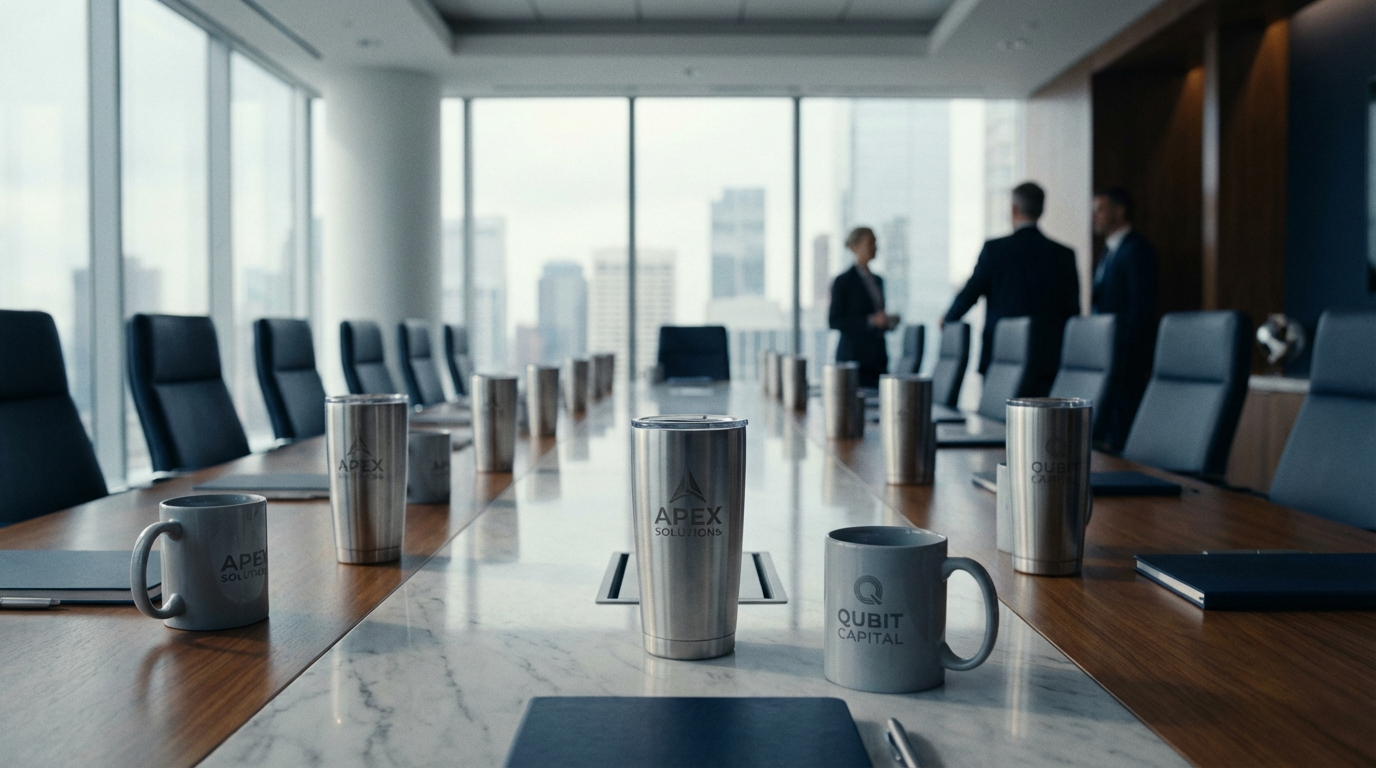
For stainless steel tumblers, laser engraving is usually the safer choice for a restrained, wear-focused mark, while UV printing is better when a logo needs color, gradients, or broad artwork coverage. The right decision depends on the tumbler finish, hand-contact area, cleaning expectations, artwork geometry, and the proof standard agreed before production.
The purchasing decision
Laser marking and engraving are related but not identical. The American National Standards Institute’s overview of laser engraving distinguishes marking, which changes appearance with little material removal, from engraving, which removes surface material and leaves a cavity. On stainless steel drinkware, a supplier may use a shallow mark, etch, or deeper engraving depending on the base finish and the requested contrast. Ask which process is actually quoted; “laser engraved” is often used as a broad commercial label.
UV printing keeps the stainless steel intact but relies on ink adhesion to the prepared surface. It can reproduce multiple colors, illustrations, and tonal transitions that a bare-metal laser mark cannot. Its different failure modes include scuffing, edge lift, abrasion, or color loss if preparation, cure, or handling is not controlled.
Side-by-side decision table
| Buying factor | Laser engraving | UV printing | Procurement implication |
|---|---|---|---|
| Visual effect | Tonal contrast from the steel or exposed layer; usually monochrome unless filled | Opaque or layered color, including complex artwork where supported | Select engraving for material-led branding; select UV when color carries recognition |
| Wear mechanism | The mark is part of the surface profile or surface appearance | Ink film sits on the prepared surface | Put high-contact zones through a handling and cleaning test |
| Logo detail | Strong for text, line art, codes, and simple marks | Strong for multicolor graphics and photographic-style elements | Test the smallest reversed text and narrow lines at final size |
| Coverage | Local mark or defined panel | Spot graphic or larger printable area, subject to tumbler geometry | Confirm usable imprint area, not only the artwork’s flat dimensions |
| Curved surfaces | Requires rotary alignment and control of focus or position | Requires fixture, registration, and control of image distortion | Approve a physical sample on the actual model |
| Finish dependency | Bare, coated, colored, and PVD surfaces produce different contrast | Coating, gloss, texture, and pretreatment affect adhesion and color | Name the substrate finish in the RFQ and proof |
| Color matching | Limited by the surface and process; do not assume a precise brand-color match | More suitable for brand colors, but proof against the actual substrate | Specify acceptable visual tolerance rather than promising an exact screen match |
| Personalization | Efficient for names or serial-like variable marks when the workflow supports it | Possible, but variable-data setup and inspection should be confirmed | Define whether every unit has the same artwork or unique data |
| Production risk | Incorrect power, speed, focus, or location can create uneven contrast or surface damage | Poor adhesion, incomplete cure, registration, or scuffing can affect appearance | Require a documented approval sample and clear defect criteria |
When laser engraving is the better fit
Choose laser engraving when the brand wants a quiet, premium mark that should not depend on ink color. It suits names, initials, a one-color logo, a short identifier, or a design intended to feel integrated with the metal. It is also a practical option when the logo sits on a high-touch panel and the program values surface-level wear resistance over full-color impact.
The finish must be considered first. A laser can reveal a layer beneath a coating, create contrast on bare steel, or produce a different tone on a treated surface. The same artwork can look different on powder coat, polished steel, or a colored tumbler. Do not approve a laser result from a photograph of another finish.
Process control matters more than the word “laser.” NASA’s laser marking and engraving process specification calls for qualification by material and configuration, documented equipment settings, representative coupons, and verification of location, legibility, and surrounding-surface condition. Approve the actual material, finish, artwork scale, and machine setup instead of treating a generic sample as proof.
A laser mark can expose a design problem. Thin strokes, tiny letter counters, or a logo across a seam may become uneven or hard to read. The remedy is usually artwork adjustment or a better location, not simply more laser power.
When UV printing is the better fit
Choose UV printing when the logo depends on multiple colors, gradients, fine illustration, or a larger visual field. It is useful for a campaign graphic that needs to resemble the supplied artwork rather than a monochrome interpretation of it. It can also make sense when a brand wants white ink or a layered visual on a dark or coated tumbler, provided the supplier confirms the ink sequence and expected appearance.
The key question is whether the finished decoration suits the item’s intended handling. State whether the claim applies to hand washing, a defined dishwasher program, or dry handling. Avoid “dishwasher safe” unless the exact decorated product and care method has been tested.
The FDA explains that food-contact substances include packaging components, preparation surfaces, cookware, and substances applied to packaging surfaces. Its consumer overview of food-contact substances also emphasizes that authorization depends on the intended use and exposure. For drinkware procurement, this means the decoration decision should be separated from the food-contact question: keep decoration away from the rim and interior unless the supplier can provide documentation appropriate to that intended use. Do not treat a generic “food safe” phrase as a complete compliance file.
UV is also sensitive to geometry. A wide wrap on a tapered tumbler can stretch or compress visually. A logo that looks balanced on a flat proof may look heavy on one side after rotary application. White underprint, gloss differences, and the transition from coated to uncoated zones can change the result. A proof should therefore show the artwork on the actual vessel shape, not only as a rectangular image.
Use the artwork and the use case together
Start with recipient behavior. For an executive gift carried occasionally and displayed on a desk, either method may work if the visual objective is clear. For an employee hydration program, repeated cleaning raises the value of a durable surface mark or tested UV specification. For an event giveaway, full-color campaign artwork may justify UV, while a simple logo may favor laser.
Then inspect the logo. A one-color vector mark with bold geometry is a natural laser candidate. A gradient, photographic element, several brand colors, or a large illustration is a natural UV candidate. Exposed steel or an approved filled impression may let laser meet a two-color brief. Judge that from a physical proof.
Use the artwork checklist for curved drinkware to define imprint area, line weight, clear space, orientation, and variable names.
A production-ready specification process
-
Define the surface. Record stainless-steel grade if specified, coating or PVD finish, gloss or texture, tumbler model, and the exact decoration zone. Include a photo or drawing with a centerline and orientation.
-
Define the visual target. State “surface contrast” for a laser-led mark or list the required ink colors and white-underprint expectation for UV. If color matters, supply brand references and agree on how the physical proof will be judged under ordinary lighting.
-
Define the operating exposure. Describe hand contact, expected cleaning, packaging friction, outdoor exposure, and whether the tumbler will be used for a short campaign or a long-lived employee program. These are use conditions.
-
Approve the right sample. Request the same tumbler body, finish, decoration position, artwork size, and process intended for production. The custom drinkware sample-approval checklist is useful for recording visual, functional, and packaging decisions in one place.
-
Write pass/fail criteria. Examples include correct orientation, no visible spatter, clean edges, legible small text, acceptable color appearance, no obvious scuffing after the agreed handling test, and no decoration in a food-contact zone. Avoid vague language such as “high quality.”
-
Lock the change point. After artwork and sample approval, changes to finish, tumbler model, imprint location, or process should trigger a new review. A production line cannot be held to a proof made on a different substrate.
A simple cost-and-risk calculation
Do not compare only the quoted decoration price. Use a decision cost that reflects the program’s purpose:
decision cost per usable unit = quoted unit cost + setup cost ÷ order quantity + expected replacement cost per unit
Suppose a buyer is evaluating 500 tumblers. A hypothetical UV quote has a setup charge of $120 and a hypothetical unit decoration charge of $1.40. Its decoration subtotal before freight is:
$1.40 + ($120 ÷ 500) = $1.64 per unit
Those figures are an example of the method, not a market price. If the chosen process is more likely to produce rejected units for a particular curved, high-touch application, add a documented replacement allowance rather than hiding that risk inside an unexplained contingency. Conversely, do not add a risk premium to laser merely because the logo is simple. Use the sample and agreed inspection criteria to estimate usable output.
DrinkwareWorks USA’s existing operating facts are also relevant to planning: stainless steel tumblers and water bottles have a 50-unit MOQ and 2–4 week production after approved artwork. These are production windows, not freight promises. Confirm any special finish, variable names, or complex proof cycle before releasing the purchase order.
Common mismatch warnings
A frequent mismatch is selecting UV for a dark coated tumbler because the digital proof looks vivid, then discovering that the physical color relationship is different under office lighting. Another is selecting laser for a fine multicolor crest and expecting the metal mark to reproduce the supplied artwork.
A second mismatch is putting either method on the wrong part of the vessel. A logo under the thumb may receive more abrasion than one on the front panel. A mark too close to the rim can create cleaning and food-contact questions. A wrap crossing a seam or taper may distort. Location is a production variable, not just a design preference.
Approving only a digital proof is another common error. Digital artwork proves content and approximate placement, not contrast, adhesion, registration, or finish. For a B2B order, a physical approval sample is the decision gate.
Quick selection checklist
- Choose laser when the mark is primarily one color, surface-integrated, and exposed to regular handling.
- Choose UV when color, gradients, white ink, or broad graphic coverage is central to recognition.
- Name the tumbler finish, not just “stainless steel.”
- Put the intended cleaning and handling conditions in writing.
- Keep decoration away from the rim and interior unless the supplier provides use-specific documentation.
- Approve a sample at final artwork size on the production configuration.
- Record location, orientation, color expectation, line detail, and acceptable defects.
- Reapprove if the finish, vessel, artwork scale, or decoration process changes.
For a broader technical comparison of decoration methods, see laser engraving, UV printing, and screen printing on drinkware. When the direction is clear, the stainless steel tumbler collection can be evaluated against the required finish, imprint area, MOQ, and approval plan rather than selected from artwork alone.
Frequently asked questions
Is an engraved tumbler more durable than a UV-printed tumbler?
Often, a properly executed laser mark is less vulnerable to ink-film abrasion because the surface itself has been altered. That does not make every laser result permanent under every use condition. Finish, depth, location, cleaning, and process settings still matter. UV durability must be evaluated against the agreed handling and cleaning exposure.
Can UV printing reproduce an exact brand color on stainless steel?
It can reproduce a closer color-led design than a monochrome laser mark, but an on-screen color is not a physical guarantee. Stainless color, coating, gloss, white underprint, ink behavior, lighting, and proof conditions all affect appearance. Approve the color on the actual decorated tumbler and define acceptable visual variation.
Is laser engraving safe on a drinking tumbler?
The decoration location matters. Keep the mark on the exterior away from the rim and interior unless the supplier has documentation for the intended food-contact use. The FDA treats substances and surfaces that contact food as a regulated category, so a general statement about laser engraving is not a substitute for use-specific documentation.
Which method is better for a detailed logo?
“Detailed” has two meanings. Fine monochrome line work and text can favor laser when contrast is adequate. Detailed multicolor artwork, gradients, or photographic elements favor UV. In both cases, review the smallest feature at final size on the real tumbler rather than judging a large flat file.
What should a buyer put in the RFQ?
Specify the tumbler model and finish, decoration method, artwork size, location, orientation, colors, expected handling, cleaning exposure, sample requirement, inspection criteria, and whether the artwork is identical on every unit. Also state that any change to the approved configuration requires review before production.
Sources