B2B Procurement
Custom Drinkware for Business: The 2027 Corporate Buyer’s Guide
A practical 2027 procurement guide to choosing custom drinkware for business, from product fit and MOQ to artwork, QC, compliance, and delivery.
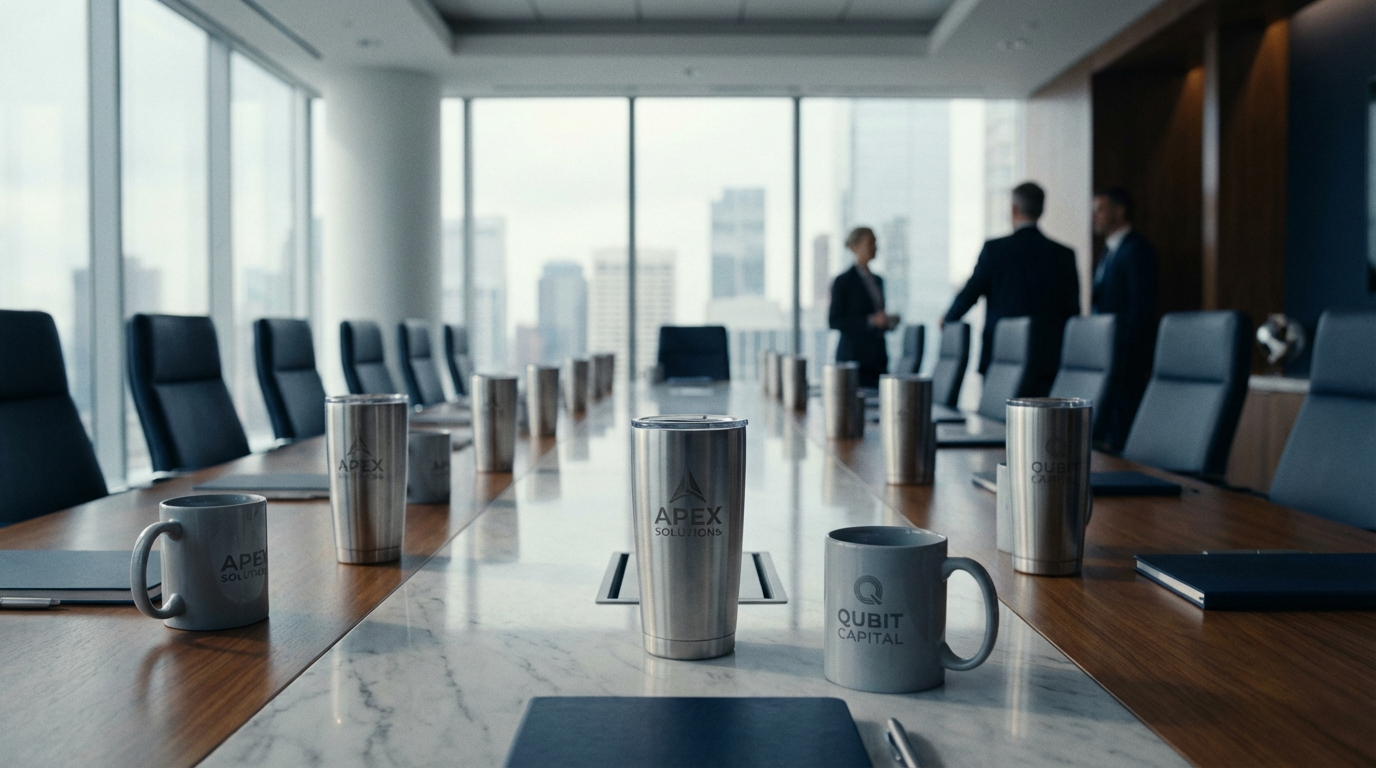
For business buyers, the right custom drinkware program starts with the use case, not the logo. Define who will receive it, how it will be used, the required quantity, decoration, approval owner, inspection plan, and delivery point. Then compare the landed specification—not just unit price—against MOQ, production window, food-contact documentation, packaging, and replenishment risk.
What “custom drinkware for business” means
Custom drinkware for business is a procurement program in which a company specifies a drinkware product, decoration, quantity, packaging, and delivery arrangement for employees, customers, events, retail, or channel partners. “Custom” may mean a logo on an existing shape, a branded color and finish, a personalized name, or a newly tooled form. Those options do not carry the same cost, approval burden, or schedule exposure.
A buyer’s first job is to separate the business objective from the item. An employee wellness program prioritizes daily usability and cleaning. A trade-show giveaway prioritizes portability, visual recognition, and controlled distribution. An executive gift may justify more elaborate decoration and individual presentation. A café or retailer may need repeatable specifications and replenishment rather than a one-time shipment. Treating all four as “logo drinkware” produces weak specifications and avoidable rework.
Start with the recipient and operating environment
Write a one-sentence intended-use statement before requesting quotes. For example: “A reusable bottle for field-service employees who carry cold water outdoors, issued once at onboarding and replenished annually.” This statement tells the supplier more than “premium bottle with our logo.” Add the likely drink temperature, whether the item travels in a vehicle or bag, whether one-hand operation matters, and how it will be cleaned.
Then identify the distribution model. Bulk cartons sent to one warehouse are operationally different from individually boxed gifts sent to several offices. If addresses are incomplete or recipients are still changing, do not promise a split-delivery plan in the purchase order without confirming the additional handling, labeling, and freight requirements. A supplier can manufacture to one specification while fulfillment remains a separate coordination problem.
Product decision table
| Business need | Practical starting point | Specification questions | Main procurement risk |
|---|---|---|---|
| Employee hydration or onboarding | Stainless steel water bottle | Capacity, lid style, carry method, cleaning instructions, logo visibility | Choosing a lid that does not fit the work setting |
| Desk, commute, or event program | Stainless steel tumbler | Vehicle-cup fit, opening, finish, decoration area, packaging | Paying for features recipients will not use |
| Office coffee or client hospitality | Ceramic mug | Capacity, handle geometry, glaze, decoration method, carton protection | Ceramic food-contact and breakage controls |
| Premium recognition or client gift | Higher-finish tumbler or mug | Gift box, personalization, proof standard, recipient data | Packaging and personalization extending the critical path |
| Retail or resale program | A repeatable SKU specification | Barcode/label needs, color consistency, reorder trigger, carton pack | Losing consistency between production runs |
For background on how capacity and operating conditions affect specifications, compare this guide with custom tumblers bulk order guidance. That article should support, not replace, a written purchase specification.
Materials and food-contact documentation
Stainless steel and ceramic are not interchangeable simply because both hold beverages. Stainless steel is commonly selected when a program needs impact tolerance, a travel-oriented format, or vacuum insulation. Ceramic often suits desk use, hospitality, and a traditional coffee experience, but it is heavier and more vulnerable to chips or breakage during handling.
A procurement file should identify every component that may contact the beverage: vessel, interior coating, lid, gasket, straw, adhesive, and decoration where applicable. Ask what documentation applies to the specified material and intended conditions of use. The U.S. Food and Drug Administration’s food-contact-substances resource explains that food-contact substances are managed through applicable authorizations, regulations, and conditions of use; “FDA approved” by itself is not a sufficiently precise purchasing specification.
Ceramic buyers need a separate control. The FDA guidance on imported traditional pottery and ceramicware discusses extractable lead, manufacturing controls, and the risk of treating “lead free” as an unsupported label. Request documentation that matches the actual mug, glaze, decoration, and intended food use. Do not infer compliance from a supplier’s general brochure or from a test report for a different SKU.
MOQ, schedule, and specification lock
MOQ means minimum order quantity: the smallest production quantity accepted under a stated specification. It may apply to a product, color, decoration method, or variant rather than to the entire purchase order. Ask the supplier to state exactly what the MOQ covers and whether several colors or lid combinations can be combined.
For DrinkwareWorks USA’s current planning assumptions, stainless steel tumblers and water bottles carry a 50-unit MOQ, with production typically taking 2–4 weeks after approved artwork. Ceramic mugs carry a 100-unit MOQ, with production typically taking 3–5 weeks. These are production windows after artwork approval, not a promise that quotation, sampling, freight, customs, receiving, or internal distribution will take no additional time. Confirm the applicable window for the exact SKU and decoration before committing to an event date.
The critical date is usually not “production starts.” It is the date the commercial specification is locked: product, finish, artwork, imprint position, packaging, quantity, and ship-to instructions. A late change can force a new proof, a material or decoration change, a revised carton plan, or a rescheduled production slot. Have one named approver and require the approved proof to be attached to the purchase order.
Artwork and decoration controls
A production-ready artwork packet should include the vector logo or other agreed file, color references, imprint dimensions, placement, orientation, and any clear-space rule. Define whether the visual target is a single-color mark, a multicolor print, an engraved mark, or a full-wrap treatment. Curved surfaces can change apparent scale and alignment even when the digital artwork is correct.
The proof is a decision document, not merely a marketing mockup. It should show the actual product or a clearly labeled representation, decoration location, approximate size, finish, and any limitations. If color matching matters, define what will be judged under which reference condition. For a deeper technical comparison, see laser engraving versus printing. Never approve a method substitution verbally; record the change and its effect on appearance, durability, and schedule.
Quality plan: define pass and fail before production
A useful quality plan divides defects into four groups:
- Critical: a safety or functional condition that makes the item unsuitable for intended use, such as a sharp exposed edge or leakage that violates the agreed specification.
- Major: a condition likely to prevent normal use or materially damage the brand presentation, such as a badly positioned logo or a lid that does not close as specified.
- Minor: a limited cosmetic variance that does not prevent use but is outside the approved visual standard.
- Packaging: carton damage, missing components, incorrect labels, or pack counts that disrupt receiving and distribution.
Specify the inspection stage: incoming material, first article, in-process, pre-shipment, or receiving. For lot-based acceptance sampling, the ASQ overview of ANSI/ASQ Z1.4 and Z1.9 explains that Z1.4 addresses inspection by attributes and Z1.9 addresses inspection by variables, each using sampling plans tied to an AQL. An AQL plan is not a guarantee that every unit is defect-free; it is a defined method for accepting or rejecting a lot based on a sample. Put the chosen standard, inspection level, defect classes, and acceptance numbers in the purchase documents.
Use a sample approval checklist that tests the things the recipient will notice: logo position, finish, lid fit, leakage, component count, packaging, and carton labeling. A production sample should be compared against the approved specification, not against memory. See the custom drinkware sample approval checklist for a practical control structure.
A simple landed-cost calculation
Unit price is only one line in the business case. Use a transparent formula:
Landed program cost = product and decoration + setup or tooling + packaging + inspection/testing + freight and import charges + receiving or kitting labor.
For example, assume a buyer is evaluating 240 tumblers. The quote contains a product-and-decoration amount of $2,880, packaging of $240, inspection of $120, and freight/import charges of $600. If receiving and kitting are budgeted at $360, the modeled program cost is:
$2,880 + $240 + $120 + $600 + $360 = $4,200
$4,200 ÷ 240 = $17.50 per delivered recipient.
These figures are a calculation example, not a DrinkwareWorks USA price claim. Replace each placeholder with written quote data. If ten percent of the units are held as operational reserve, the effective cost per planned recipient changes again. State whether the denominator is units ordered, units delivered, or units actually distributed; otherwise two teams can report different “cost per unit” figures from the same order.
The procurement process
1. Write the brief. Record recipient, use case, quantity, variants, decoration, packaging, ship-to locations, required-in-hand date, and approver.
2. Shortlist the format. Eliminate products that fail the operating environment before asking for a decorative quote. A beautiful item that cannot fit the recipient’s cup holder or cleaning routine is not a successful purchase.
3. Request comparable quotes. Ask each supplier to separate product, decoration, setup, packaging, testing, freight assumptions, taxes or import charges, and any optional services. Request MOQ by variant and define the delivery boundary.
4. Approve the sample and proof. Test the product and decoration under the intended-use conditions. Record comments in one revision-controlled file.
5. Lock the purchase specification. Attach the final artwork, dimensions, finish, components, packaging, quantity, inspection criteria, and ship-to instructions to the order.
6. Inspect and receive. Use the agreed inspection plan, photograph exceptions, reconcile carton counts, and quarantine disputed units before distribution.
7. Close the loop. Record actual delivered quantities, damage, recipient feedback, and remaining stock. That evidence improves the next reorder more than a subjective “the event went well.”
Buyer’s pre-approval checklist
- Recipient and intended use are explicit.
- Product, material, capacity, lid, finish, and decoration are named.
- MOQ is confirmed per SKU, color, and variant.
- Production timing starts after an identified artwork-approval date.
- Food-contact documentation matches the actual components and use.
- Artwork proof shows placement, size, color intent, and method.
- Sample acceptance criteria cover function, cosmetics, and packaging.
- Inspection level and defect categories are written into the order.
- Landed-cost lines and the cost denominator are defined.
- Ship-to, carton labeling, and receiving responsibilities are assigned.
- A reorder or reserve-stock decision is documented.
Common buyer errors in 2027 planning
The first error is selecting a product before defining recipients. The second is comparing factory unit price with a competitor’s delivered price. The third is assuming a sample is a complete production specification. The fourth is asking for a delivery guarantee without naming the approval date, freight mode, and receiving location. The fifth is treating a broad food-contact statement as evidence for every component. The sixth is adding individual gift packaging after the production schedule has already been approved.
A disciplined buyer can avoid most of these errors with a short, signed specification. If the project has multiple variants or delivery points, use a line-by-line RFQ and supplier review rather than an informal email chain.
Frequently asked questions
What is the MOQ for custom business drinkware?
For DrinkwareWorks USA’s current planning assumptions, stainless steel tumblers and water bottles have a 50-unit MOQ, while ceramic mugs have a 100-unit MOQ. Confirm whether the MOQ applies per product, color, lid, or decoration variant.
How long does custom drinkware production take?
Current planning assumptions are 2–4 weeks for stainless steel tumblers and water bottles, and 3–5 weeks for ceramic mugs, beginning after approved artwork. Quotation, sampling, freight, customs, receiving, and distribution need separate timing allowances.
Should a business choose a tumbler, bottle, or mug?
Choose from the recipient’s operating environment. Bottles suit hydration and transport, tumblers suit commute or event use, and ceramic mugs suit desk or hospitality programs. Validate the lid, cleaning, packaging, and decoration before approval.
Does an AQL inspection mean every unit passes?
No. Acceptance sampling evaluates a defined sample from a lot against agreed criteria. It helps a buyer make a consistent lot decision, but it does not replace clear specifications, functional checks, or traceable corrective action.
What should a U.S. buyer request for food-contact compliance?
Request documentation tied to the actual vessel, coatings, lids, gaskets, adhesives, and decoration, along with the intended conditions of use. Do not rely on an unsupported “FDA approved” phrase or a report for a different product.
Next step
When the specification is complete, compare the approved product and decoration against the relevant custom drinkware product range. Use the same written brief for every supplier so the final decision reflects delivered performance, documented risk, and operational fit rather than an attractive but incomplete quote.
Sources