Welcome Kits
Stainless Steel vs. Ceramic Mugs for Employee Welcome Kits
Compare stainless steel and ceramic mugs for employee welcome kits by use case, safety, shipping, decoration, MOQ, timing, and total kit fit.
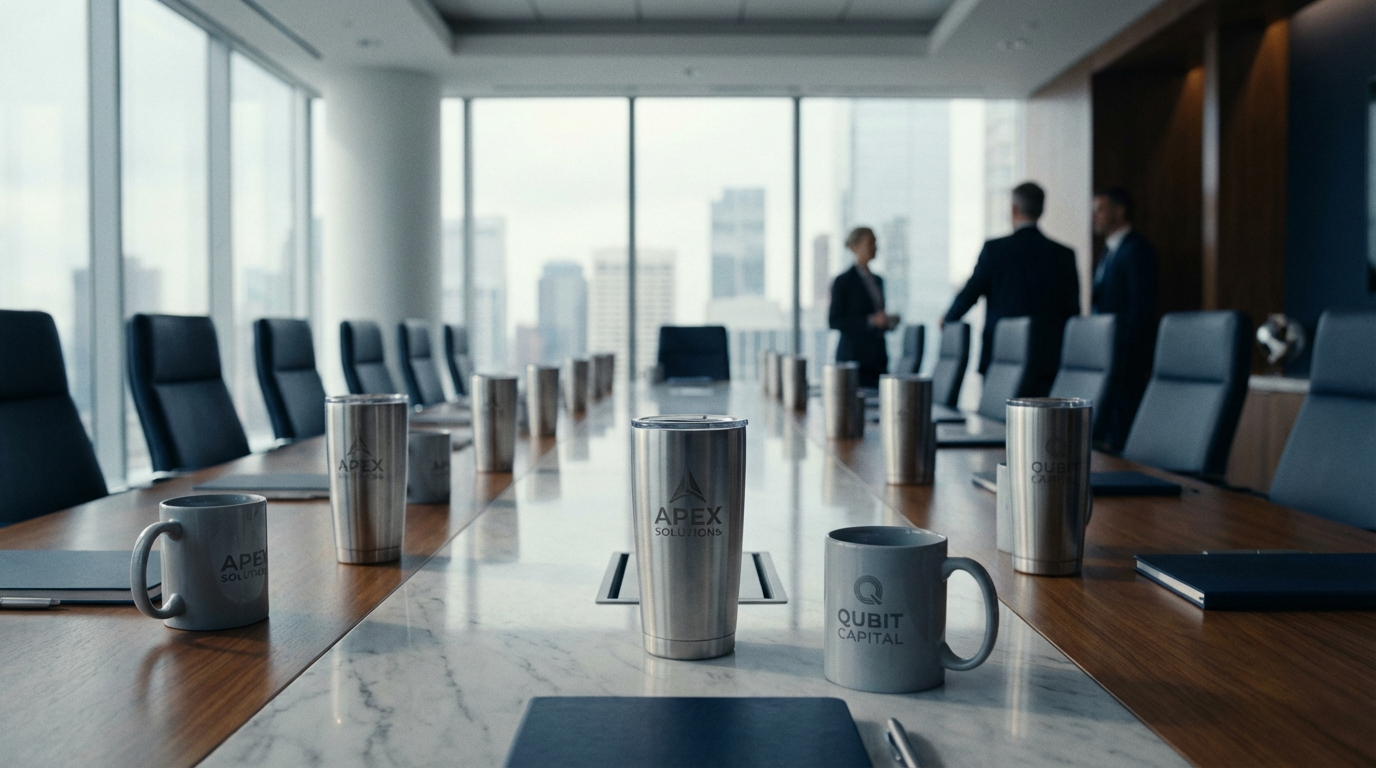
For most employee welcome kits, choose stainless steel when the mug must travel, retain temperature, or survive daily handling; choose ceramic when the kit is desk-based and the coffee ritual matters more than portability. The right decision depends on use environment, packaging, decoration, food-contact documentation, order size, and the cost of delivering a usable item—not simply the unit price.
The procurement decision
A welcome-kit mug is workplace equipment with a recipient, destination, packing method, and expected use pattern. A remote employee may carry it from a home office to a coworking space. A headquarters hire may leave it beside a coffee machine. Those are different specifications even when the logo and capacity are identical.
In this article, “stainless steel mug” means a steel vessel, typically selected for mobility and durability; it may be insulated or non-insulated, so do not assume temperature performance without a written specification. “Ceramic mug” means a fired ceramic body with a glaze or decoration intended for beverage use. Neither material is automatically the better corporate choice. The brief determines the winner.
Decision matrix
| Buying criterion | Stainless steel | Ceramic | Procurement implication |
|---|---|---|---|
| Primary setting | Commute, hybrid work, field use, travel | Desk, office kitchen, home office | Match the vessel to where it will be used, not where the kit is assembled |
| Temperature requirement | Strong candidate when insulation is specified | Usually a conventional hot-drink vessel | Ask for performance requirements rather than relying on material names |
| Drop and handling risk | Generally more forgiving of knocks | Can chip or break if dropped | Steel reduces replacement and damage risk, but still needs inspection and packaging |
| Weight and shipping cube | Model the actual wall, lid, and accessories | Model the actual body, handle, and protective pack | Compare landed kit cost, not product price alone |
| Decoration | Laser marking, print, or coating-dependent methods | Glaze, print, decal, or sublimation-dependent methods | Approve a physical sample for logo scale, color, and placement |
| Microwave use | Usually not appropriate unless the supplier explicitly specifies it | Often a better fit, subject to product instructions | Put appliance guidance in the kit insert when relevant |
| Food-contact review | Check steel, coating, lid, seal, and ink scope | Check ceramic body, glaze, pigments, and decoration | Request documentation for the complete intended-use configuration |
| Brand feel | Technical, mobile, durable | Familiar, warm, office-oriented | Choose the signal that supports onboarding, not a generic “premium” claim |
This table is a screening tool, not a substitute for a sample. A ceramic mug with a thick handle may be more attractive but consume more carton space. A steel travel mug may be lighter than a large ceramic mug, yet a lid, silicone seal, or textured coating adds components that need review. Build the comparison from the actual bill of materials.
When stainless steel is the better fit
Select stainless steel when the recipient is expected to move between locations. It is a practical choice for distributed teams, field employees, commuting programs, and kits mailed to individual addresses. The material is also useful when the welcome item must tolerate ordinary bumps during unpacking and daily transport. That does not make it indestructible; a lid can leak, a coating can scratch, and a thin wall can dent. Define the failure modes you will inspect.
Steel also makes sense when the onboarding message includes hydration, commuting, or long workdays. An insulated format can support hot or cold beverages, but insulation is a construction feature, not a synonym for stainless steel. Specify wall construction, closure, leak expectations, and any claimed temperature performance separately. For technical context, a buyer can review the existing guide on the physics of temperature retention rather than accepting an unqualified “keeps drinks hot” statement.
Material grade deserves a written answer. If the supplier proposes a stainless grade, record it on the purchase order and sample approval. The hidden cost of cheap stainless steel is not only cosmetic: an undocumented material substitution makes future replenishment and quality investigation harder. Also review the interior, rim, welds, lid, gasket, and decoration as separate contact or performance surfaces.
The trade-off is experience. A metal vessel can feel less like a traditional coffee mug, and some employees dislike drinking hot beverages from a narrow travel opening. If the objective is a welcome-desk coffee ritual, test the rim geometry and handle comfort with representative users. A durable object that employees avoid is still poor procurement.
When ceramic is the better fit
Choose ceramic when the mug will live primarily at a desk or office kitchen and the desired signal is familiar, calm, and hospitality-oriented. The handle, broad opening, and conventional silhouette make it easy to use for coffee, tea, or cocoa. Ceramic also gives the brand a large, readable decoration area on many shapes, although the final imprint method and color behavior must be approved on the actual glaze.
Ceramic is less suitable when the kit is mailed without robust protection, passed through several internal handling points, or issued to employees who work around vehicles, workshops, or outdoor sites. A breakage allowance may be appropriate for internal planning, but do not invent a loss rate. Instead, run a pack-out test: assemble a filled carton, inspect all contact points, and document the protective materials and drop-test standard your team requires.
Food-contact control is especially important for decorated ceramics. The FDA describes food-contact substances broadly, including cookware and substances applied to packaging surfaces, and explains that intended use and migration data matter in safety review (FDA food-contact information). For ceramicware, request evidence that the body, glaze, pigments, and decoration are appropriate for the intended beverage use. The FDA’s guidance on imported pottery warns that extractable lead can arise from glaze or manufacturing controls and that “lead free” wording is not a substitute for proper evidence (FDA pottery guidance). FDA also notes that pottery with cadmium-based pigments may leach cadmium and that cadmium is not authorized as a food or color additive in foodware (FDA cadmium and foodwares).
These sources do not mean every ceramic mug is unsafe. They show why buyers should request product-specific documentation, identify the tested lot and components, and confirm that the decorated version is included. Treat a generic supplier statement as a starting point, not a complete compliance file.
Shipping and kit economics
Welcome-kit decisions fail when teams compare quoted unit prices but ignore the delivered configuration. Use a simple landed-kit model:
Cost per delivered kit = mug + decoration + individual protection + insert + kitting labor + freight allocation + expected replacement allowance
The replacement allowance should be an internal planning assumption based on your own pack-out or historical program data. Do not present it as a universal breakage statistic. Freight allocation should likewise come from the chosen route, carton dimensions, shipment split, and destination pattern.
Consider this conditional example. A team is preparing 120 kits for a hybrid onboarding class. The steel option is quoted at $X per unit and the ceramic option at $Y; those placeholders are deliberately not prices, because the supplier quote, decoration, packaging, and delivery terms determine the real values. If steel adds $A per unit but avoids $B of protective packaging and $C of replacement exposure, compare 120 × (A − B − C) rather than the headline unit delta. If ceramic uses a smaller protective insert than expected, recalculate with measured carton dimensions. A procurement worksheet should contain the real values before approval.
For DrinkwareWorks USA programs, stainless steel tumblers and water bottles have a 50-unit MOQ with 2–4 weeks of production after approved artwork. Ceramic mugs have a 100-unit MOQ with 3–5 weeks of production. These are production windows after artwork approval, not a promise of transit time, customs clearance, kitting, or final-mile delivery. If the onboarding date is fixed, work backward from receipt and include time for proof review, sample decisions, packaging, freight, and distribution.
A 120-kit program clears either stated MOQ, but a smaller pilot may not. If your new-hire forecast is 60 people, ceramic may require a planned overage or a different commercial arrangement; do not assume an exception. If you have multiple start dates, compare the cash and storage impact of ordering the full cohort against replenishing in batches. That is an operations decision, not merely a material preference.
Decoration and brand control
Decoration should follow the surface and the use pattern. On steel, specify whether the logo is engraved, printed, or applied over a coating. On ceramic, specify the decoration area, color count, method, and care limitations. A screen proof cannot show every interaction between ink, glaze, coating, curvature, and light. Approve a physical pre-production sample, or document why a sample is not feasible.
Use the same artwork file and approval owner for both materials, but do not assume the same visual result. A dark logo on a light ceramic glaze may read differently from a mark on brushed or powder-coated steel. Define acceptable position, orientation, minimum legibility, and acceptable color variation. The sample remains the controlling reference for a specific order.
Packaging is part of the brand experience and the quality plan. Ceramic normally needs individual protection against impact. Steel may need less cushioning, but its surface can still be scratched by loose accessories or carton dividers. Put the mug, lid, insert, and any gift-box components through one controlled pack-out. Photograph the approved arrangement and attach a packing diagram to the production file.
A practical selection process
- Define the recipient context. Record desk-only, hybrid, remote, field, commute, or mixed use. Note whether a lid, handle, microwave compatibility, or one-hand operation is essential.
- Set the functional specification. State capacity, dimensions, closure, insulation requirement, care instructions, and acceptable cosmetic defects. Avoid substituting a material name for a performance requirement.
- Build the two-material quote. Request the same decoration brief, packaging level, quantity, delivery destinations, and commercial terms for both options.
- Review food-contact documentation. Ask for documents that cover the actual body, glaze or coating, decoration, lid, seal, and intended beverage use. Escalate gaps before artwork approval.
- Approve samples and pack-out. Test opening, drinking comfort, fit in the gift box, logo appearance, and protection. Keep a signed or versioned approval record.
- Release production and inspect. Confirm quantity, material, decoration, packaging, and carton markings against the approved specification. Use the custom drinkware sample approval checklist to keep the handoff concrete.
Buyer’s checklist
- Recipient environment and travel risk are written down.
- Steel insulation, closure, gasket, and care instructions are separately specified.
- Ceramic glaze, decoration, and food-contact evidence cover the supplied configuration.
- Quantity is checked against the 50-unit steel or 100-unit ceramic MOQ.
- Production timing starts only after approved artwork; freight and kitting are scheduled separately.
- Decoration method, imprint area, color, and tolerance are in the proof.
- Sample and pack-out are approved before the full run.
- Carton dimensions and protection are based on measured or supplier-confirmed data.
- Final distribution plan distinguishes central delivery from individual shipments.
- The insert tells employees how to clean and use the item safely.
Recommendation by use case
For a remote-first kit shipped to homes, start with stainless steel unless the program specifically values a traditional ceramic mug and can fund protective packaging. For a headquarters welcome box placed on a desk, ceramic is often the more natural user experience. For field, travel, or mixed-location teams, steel has the stronger operational case. For an executive or hospitality-led kit, compare both samples with the packaging and the rest of the contents; the mug should support the intended tone without creating a fragile fulfillment problem.
If you need a ceramic format, review the custom ceramic mugs product page for the relevant product route, then validate the exact configuration through the normal specification and approval process. The purpose is not to force a material choice. It is to make the choice auditable before employee names, addresses, and onboarding dates are attached to it.
Frequently asked questions
Is stainless steel better than ceramic for an employee welcome kit?
Not universally. Steel is usually the safer starting point for mobile, hybrid, or field use because it can be specified around transport and handling. Ceramic is often better for a desk-centered coffee experience. Choose against the recipient context and the complete delivered-kit cost.
Does stainless steel automatically mean the mug is insulated?
No. Stainless steel describes the material, while insulation describes the construction. Confirm wall design, closure, and any temperature-performance requirement in the specification.
What food-safety documents should a buyer request for ceramic mugs?
Request documentation that identifies the ceramic body, glaze, pigments or decoration, intended beverage use, and applicable testing or compliance basis. FDA guidance shows why lead, cadmium, labeling, and manufacturing controls deserve specific attention rather than a generic “food safe” statement.
Can a company order ceramic mugs below 100 units?
DrinkwareWorks USA’s stated ceramic-mug MOQ is 100 units. A smaller program should be treated as a commercial question, not an assumed exception. Stainless steel tumblers and water bottles have a stated 50-unit MOQ.
When should artwork be approved?
Approve artwork before the production window begins. The stated production timing is 2–4 weeks for stainless steel tumblers and water bottles and 3–5 weeks for ceramic mugs after approved artwork; transit, inspection, kitting, and delivery require separate planning.